News


Blog | 4 min read
November 13, 2026
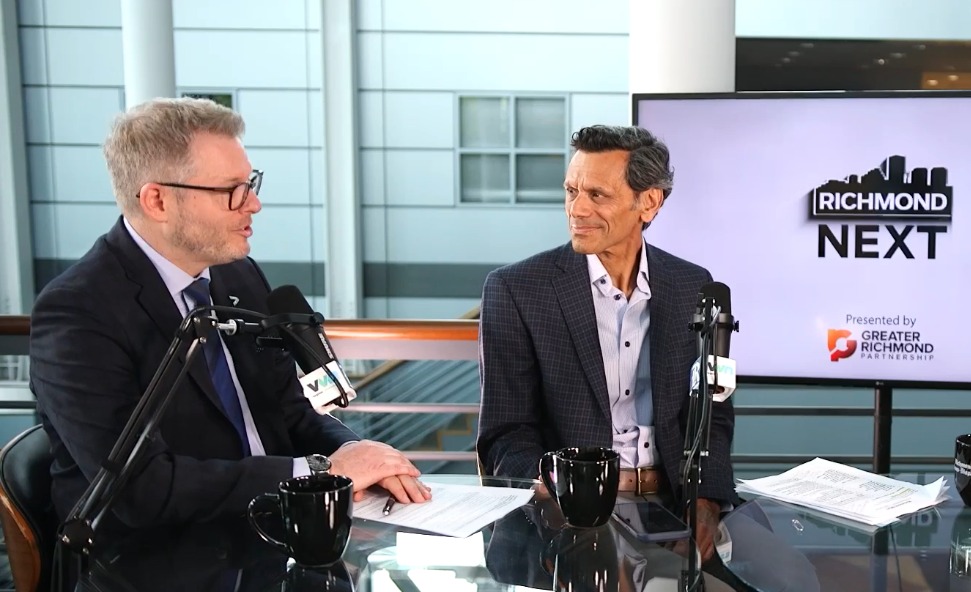
On Episode 4 of Richmond Next, a Greater Richmond Partnership (GRP) series produced with the Richmond Times-Dispatch, Dr. Rao joined host Jennifer Wakefield (President & CEO of GRP) and David Metnick (Managing Director at Accenture) to break down what AI truly means for higher education, the future workforce, and Greater Richmond’s economy.
With previous leadership experience at Central Michigan University and Montana State University-Northern, Dr. Rao brings a long-term perspective to how universities adapt to change. Leading a university with nearly 30,000 students and a team of over 25,000 employees, his focus is clear: ensuring AI enhances human talent and judgment rather than replacing it.
VCU holds a unique role in Richmond as both a talent pipeline and a major regional employer. This dual role shapes how VCU approaches new technology. Instead of viewing AI as a threat to jobs, Dr. Rao sees it as a way to rethink human potential and take repetitive, data-heavy tasks off employees’ plates.
“Everything that you have in AI really is dependent on the ethics, the data, and really the guidance that human beings bring to it…. AI is really something that we need to view as a powerful calculator. It’s not a conscious mind.”
Dr. Michael Rao
President of Virginia Commonwealth University (VCU) and VCU Health System.
Rao pointed out that many white-collar roles have traditionally required employees to spend countless hours sifting through raw data and spreadsheets. By leveraging AI to quickly consolidate information, future professionals can spend less time crunching numbers and more time focusing on critical thinking, problem-solving and strategic judgment.
VCU moved quickly to integrate AI into its curriculum. In 2024, the university launched AI minors to help students become “AI masters” before entering the job market. The response from students reflects that interest. Of the university’s 4,500 incoming freshmen last year, 3,000 took AI courses, with ethics of AI being one of the most popular subjects. And to many people’s surprise, 85% of students enrolled in these technical AI courses come from the humanities, arts and social sciences.
To Dr. Rao, this proves students aren’t intimidated by AI but instead are eager to responsibly harness it as a tool. “Education needs to be more about how we can synthesize the data that’s out there from sources that we can trust in order to get what the truth is,” he noted.
Knowing how to use AI is only part of succeeding in an evolving workforce. Since AI can process and synthesize large amounts of information, human judgment is vital for evaluating its results and determining whether its solutions are viable in a real-world setting. That judgment develops through experience, practice and learning from mistakes.
Developing that judgment requires deeper connections between universities and local employers. Rao holds an ambitious goal for every undergraduate student to complete three internships before graduation, placing them alongside experienced mentors who can help develop their professional skills. He also proposed innovative collaborations, such as university professors spending summer terms working inside corporate environments like Accenture to keep classroom instruction closely aligned with industry trends.
VCU’s medical education model is a great example of how this type of learning can work. Medical students gain practical experience through clinicals, where they work directly with patients and healthcare professionals and apply what they’ve learned in the classroom. Dr. Rao sees an opportunity to bring the same approach to other disciplines. Students in every field need opportunities to work alongside professionals, solve real-world problems and put their knowledge into practice before entering the workforce. As AI continues to evolve, these experiences will help students build the skill set needed to progress in the workforce.
For Dr. Rao, preparing students for the future means more than teaching them how to use new technology. It means giving them the practical experience and skills to apply it responsibly. By strengthening connections between universities and employers, VCU is helping prepare graduates not only to meet the needs of a changing workforce but to thrive in it.