Blog











Blog | 4 min read
July 22, 2026

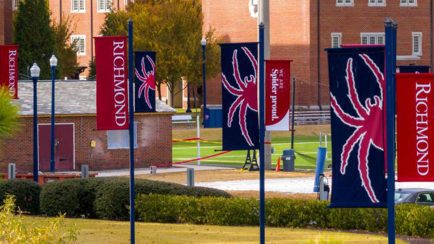
LinkedIn’s 2026 Cities on the Rise report just named Greater Richmond the No. 2 fastest-growing metro in the country for jobs and new talent — trailing only Augusta, Ga., and ahead of Reno, N.V., North Port-Sarasota, Fla., and Harrisburg, Penn. That’s a jump from 13th on the inaugural list just a year ago as LinkedIn credits “a fast-growing economy, expanding tech infrastructure and strategic East Coast location” for pulling in both employers and new residents.
LinkedIn builds this ranking from its own platform data including hiring activity, job postings and the net flow of professionals moving in versus out, across mid-sized metros. Compared to the U.S. Census, it’s a real-time read on momentum and Greater Richmond’s progress is being driven by a simple dynamic: Companies follow talent, and talent is following affordability and opportunity.
The Richmond MSA is welcoming 281 net new residents per week, and it’s pulling from major metros where living costs are higher — and expenses are only getting more expensive, especially for families. Packaged with key amenities for every walk of life, Greater Richmond provides a great fit for people who want two-hour access to the mountains, the beach and the nation’s capital.
That inflow of talent is showing up directly in the job numbers.
An analysis of industry-level data from JobsEQ, covering the past five years, ranks industries two ways: by total job growth, and by average annual percent growth. On raw job counts, three sectors lead the region: accommodation and food services, health care, and transportation. These are the industries adding the most net jobs across the metro — broad-based growth that reaches well beyond any single deal or employer.
Ranked by average annual percentage growth — the better lens for which industries are expanding fastest relative to their size — a related set rises to the top: arts, entertainment and recreation; real estate; and, again, accommodation and food services. That sector showing up on both lists tells a clear story: Greater Richmond’s hospitality scene isn’t just large, it’s one of the fastest-growing pieces of the region’s economy, fueled by the same population growth driving everything else — more residents means more demand for restaurants, entertainment, housing and the services that come with them.
Greater Richmond’s legacy strengths — finance, credit intermediation, higher education — remain real assets, and they still show up in the data. But they’re no longer the whole story and that’s the point. The industries growing fastest right now — hospitality, health care, transportation, arts and entertainment, real estate — sit largely outside that traditional anchor-institution category. The region’s labor market is diversifying, not riding on a handful of large employers.
It’s worth keeping the two data sets straight: LinkedIn’s ranking measures hiring momentum and talent migration, while the JobsEQ figures measure actual job counts over time. They’re closely related — a region doesn’t add jobs without hiring — and data tells the story from two different angles. People are moving to Greater Richmond, employers are hiring across a wide range of industries, and both trends are reinforcing each other.
Greater Richmond’s move from 13th to 2nd on LinkedIn’s list reflects real momentum: broad-based hiring backed by genuine job growth across a diverse set of industries, and a steady stream of new residents choosing the region for what it offers — affordability, opportunity and a lifestyle that puts the mountains, the beach and D.C. all within two hours. Hospitality, health care and transportation are adding the most jobs; hospitality, arts and entertainment, and real estate are growing fastest relative to their size. Put together, it’s an economy that’s expanding well beyond its traditional anchors, and a region that’s winning the competition for talent leaving higher-cost metros behind.
About The Author
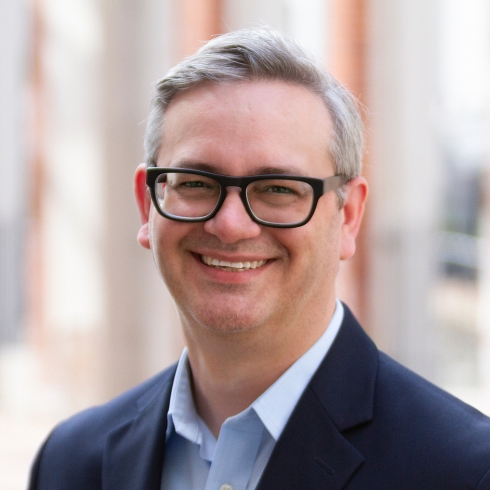
As Vice President of Marketing + Communications, Michael directs GRP’s marketing, media relations, creative projects and technical needs. Before joining the Partnership in 2007, he spent six-plus years in newspapers as News Editor at The Daily Progress in Charlottesville, earning multiple Virginia Press Association Awards for writing and design. He holds a bachelor’s in Mass Communications and a master’s in Integrated Communications, both from VCU.