
News











News | 3 min read
January 28, 2026
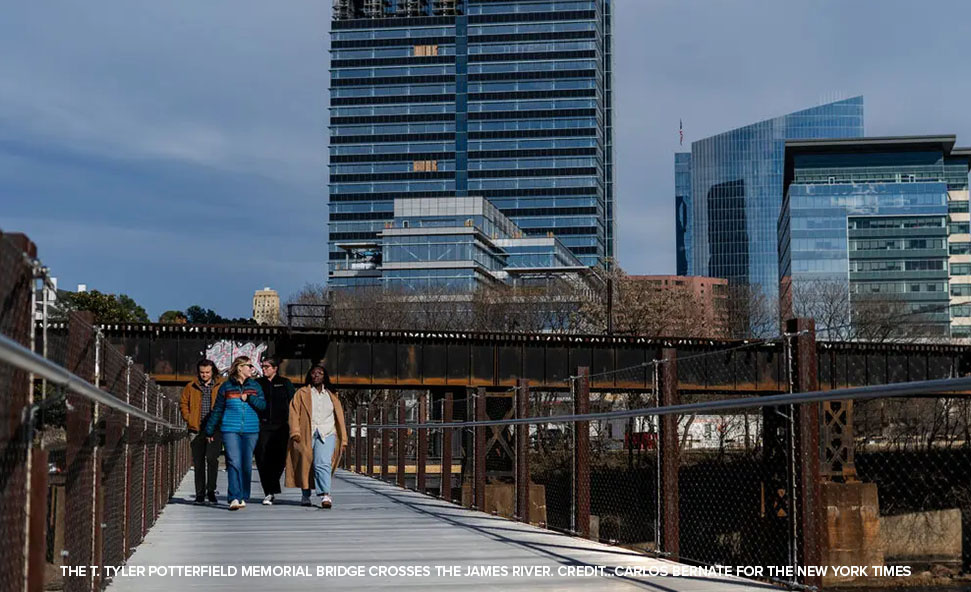
It was decidedly not love at first sight. Yearning to escape the Midwest, Melissa Longstaff and her husband decided to move to Richmond, Va., after graduating from art school in Kansas City, Mo., 35 years ago. Back then, Virginia’s sleepy capital was still locked in an embrace of its past as the seat of the Confederacy.
“What you saw when you came in was not attractive,” Ms. Longstaff recently recalled. “It was borderline scary,” she said of the city’s downtown and its main artery, Broad Street. “Very rundown. Abandoned buildings.”
Today, Ms. Longstaff and her daughter Sara Jane run Two Rabbits Vintage, a bespoke antique store in the Scott’s Addition neighborhood, a warehouse district now home to breweries, coffee shops and industrial buildings converted to residential lofts. The store’s customers have often just moved in from Washington, D.C., Philadelphia or New York. Richmond’s population, now about 230,000, has grown by about 12 percent between 2010 and 2022, well above the statewide rate in the same period, 8.2 percent.
“Transplants that come here are looking for a really cool city that aligns with their values, has a lot of history, a lot of arts, and is still affordable,” the younger Ms. Longstaff said, praising the city’s neighborhood-focused culture, access to nature and increasingly sophisticated dining scene — from the drum ceviche at Celladora Wines to a Fabergé egg bedazzled with caviar at L’Opossum. There are also more than 30 breweries in and right outside of town, helpfully connected by the Richmond Beer Trail.
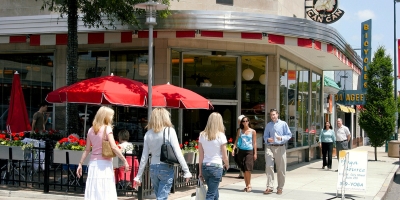 Richmond has been transforming itself throughout the last two decades. The Confederate statues along Monument Avenue are gone, toppled mostly in the summer of 2020 (Still, the history here remains complex; Scott’s Addition, for example, is named for Winfield Scott, who forced the Cherokee off their land in what came to be known as the Trail of Tears before later serving as a Union general during the Civil War). And Virginia Commonwealth University, ranked first among the nation’s public research universities for visual and performing arts by the National Science Foundation, has expanded its footprint, giving the city an unexpectedly funky vibe.
“You have many people from big cities up north, but it does have the charm of the South,” said Nicole Best, an agent with River Fox Realty. To her, that old-fashioned charm is best expressed in the porches, a Richmond staple and a must-have for summer’s brutal humidity.
The city’s diverse housing stock gives Ms. Best’s clients several options. “You can buy a 1910 rowhouse, or you can get a new construction, high-end condo,” Ms. Best said. The new build is most likely to be found in a riverfront neighborhood like Manchester or Shockoe Bottom. “Or you can go out into the suburbs and get a sprawling single-family home.”