Blog










Blog | 4 min read
May 7, 2026
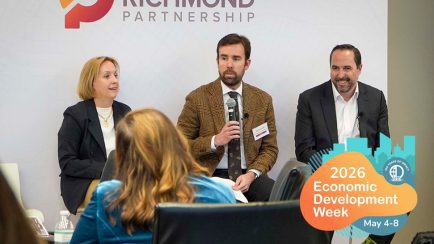
As the International Economic Development Council (IEDC) marks 100 years of shaping the profession, the Greater Richmond Partnership hosted the inaugural event of IEDC’s centennial series. The 2026 Forecast, held in January, brought a global perspective to a regional conversation about site selection, talent and the future of economic development, and it kicked off a year of centennial events that IEDC is hosting with leading economic development organizations across the world.
As the profession celebrates Economic Development Week, IEDC’s annual recognition of the work economic developers do in their communities, it is worth revisiting what the Forecast surfaced. This year’s theme spotlights 100 years of collaboration that drives innovation, growth and lasting change, and writes the next chapter of economic opportunity across the globe. For Greater Richmond, being chosen to open IEDC’s centennial calendar is a signal of how the region is already living that next chapter.
The panel paired IEDC’s view of the profession with two of its most respected research voices:
Nathan Ohle, President and CEO of the International Economic Development Council, sharing findings from IEDC’s State of the Field study.
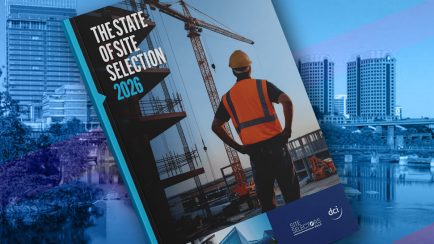
Robyn Domber, Senior Vice President of Research for Development Counsellors International (DCI), presenting results from the State of Site Selection report and new talent perception research on Greater Richmond.
Chris Lloyd, Senior Vice President and Director of Infrastructure and Economic Development for McGuireWoods Consulting and former chair of the Site Selectors Guild, offering a consultant’s view of Richmond’s competitive position.
Ohle described an industry navigating its most volatile stretch in years. Tariffs, he said, were the top concern raised by IEDC members in 2025, a topic that would have seemed implausible three years ago. Housing affordability and workforce alignment have become permanent fixtures in the conversation. Policy instability has surged and so has community activism around economic development projects.
“It’s not just about bringing job creation and capital investment,” Ohle said. The job now includes housing, childcare, crisis management and community development.
That widening scope is forcing a healthier discussion. Lloyd argued the profession is overdue for a reset on how it defines success, moving beyond announced job numbers to include skills, quality of place and economic mobility. Ohle agreed that the economic development organizations faring best are the ones engaging communities before a project is announced. “The one thing that communities really don’t want is a surprise.”
Domber walked through findings from the State of Site Selection report, co-produced by DCI and the Site Selectors Guild. The headline: communities that lack utility capacity, power reliability, site readiness and speed-to-market are eliminated early, often without ever knowing they were under consideration. As Domber put it, miss the threshold and “you’re going to be out of the conversation before you even get asked to participate.”
Site selection consultants still value fundamentals like a pro-business climate and a workforce that is ready to go, Lloyd noted. But they are now modeling against a faster, more volatile backdrop shaped by federal policy swings, tariffs and global shocks.
“Risk, volatility and multiple scenario planning are now the new normal,” Domber said.
The path forward, Lloyd added, runs through accelerated site readiness, expanded air connectivity and disciplined storytelling.
“If we don’t tell our story, no one will. Economic development is a relationship business and it’s about telling stories,” Lloyd warned, which is valuable advice for every economic development organization.
“2026 is our opportunity to celebrate our 100th anniversary,” Ohle said, “and also to think about what the next 100 years of economic development looks like.” Hosting the first event of IEDC’s centennial series gave Greater Richmond an opportunity to help set that frame, alongside two of the field’s leading research voices and a room full of regional partners.
Economic Development Week is built around recognition of the impact that economic developers do in their communities. For Greater Richmond, that recognition arrived earlier this year in the form of an invitation to open IEDC’s centennial calendar. The work discussed on infrastructure, talent and the broader value proposition of the profession, continues today.
About The Author
Christopher Hollomon is Director of Marketing at the Greater Richmond Partnership, where he supports marketing and communications initiatives focused on business recruitment to the Richmond Region. Before joining GRP in 2025, he built a diverse career in graphic design, marketing, public relations and digital media across industries including healthcare, engineering, advocacy and the arts. His work has earned regional recognition, including award-winning campaigns for Sheltering Arms Rehabilitation Centers. Christopher holds a bachelor’s degree in Speech Communications and a master’s in Corporate and Professional Communications from Radford University and studied international communications in Salzburg, Austria. He lives in Henrico County with his wife and two children.